Trump's Command of Attention Faces Voter Focus on Soaring Bills
While Donald Trump often dictates the national conversation, voters are increasingly focused on personal economic burdens, shifting the political spotlight to the soaring cost of living.
Opinion·
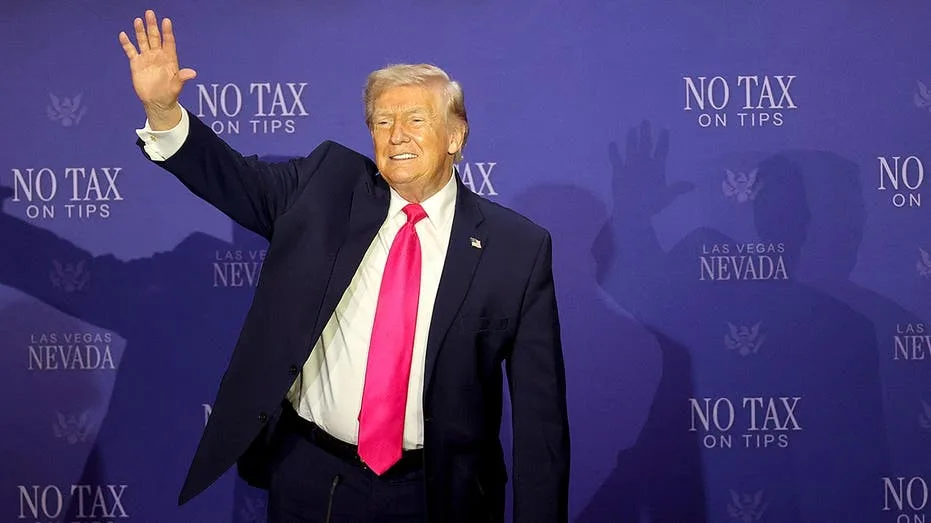
For more than a decade, Donald Trump has demonstrated an exceptional capacity to steer public discourse, defining what issues capture the nation's attention. Whether through a memorable phrase, a social media post, a high-profile dispute, a campaign rally, a trade policy, or a late-night critique, he has consistently commanded the political spotlight.
Historically, when Trump set the agenda, Washington and the media often followed suit. However, as the country approaches upcoming elections, there are indications that the public's focus may be shifting.
Voter Priorities Shift to Economic Realities
Recent survey data highlights a stark contrast between political narratives and public sentiment. When asked about the most pressing issues, the cost of living emerged as the overwhelming concern for voters. Other significant topics, such as immigration, international conflicts, or technological advancements like artificial intelligence, registered considerably lower on the public's priority list.
The message from the electorate is clear: affordability is paramount.
Despite this, a substantial portion of political discussion continues to revolve around other subjects. Debates often involve Trump's interactions with various media outlets, discussions about past administrations, or foreign policy challenges involving nations like Iran and China. While these issues hold considerable national and international importance, the average citizen's experience of the presidency is often far more immediate and personal.
For many, the impact of national policies is felt directly in their daily lives:
- At the supermarket checkout.
- When fueling their vehicles.
- Upon receiving monthly utility statements.
- Evaluating the cost of homeownership or rent.
- Accessing healthcare services.
- Filling their grocery carts.
On these critical economic indicators, recent polling data presents a challenging picture for the current political landscape. A significant majority, 62%, identifies grocery prices as a major issue. Similarly, 61% express serious concerns about gas prices. Housing costs are a major problem for 54% of respondents, and healthcare expenses trouble 52%. Furthermore, a substantial 63% of those surveyed believe the Trump administration has worsened the economy.
The Disconnect Between Data and Lived Experience
While an administration might point to positive macroeconomic indicators, such as sustained employment growth and a robust stock market, the lived experience of voters often differs. For example, recent economic analysis noted resilient job growth and an unemployment rate of 4.1%.
However, politicians frequently encounter a fundamental truth in public sentiment: you cannot dictate how voters perceive the economy; they will tell you their reality. This principle held true for former President Joe Biden, who frequently highlighted improving macroeconomic statistics—decreasing inflation, job creation, and the avoidance of a predicted recession—only to be met with public questions about the price of everyday goods, like a dozen eggs.
Donald Trump, in his previous political campaigns, demonstrated a keen understanding of this disconnect, effectively channeling economic frustration into political momentum. Now, as a prominent political figure, he finds himself in a similar position, grappling with public sentiment regarding economic challenges.
Surveys underscore this vulnerability. A recent Reuters/Ipsos poll indicated that only 17% of U.S. adults approved of Trump's approach to the cost of living. His overall approval rating in that survey stood at 32%. Another independent poll, which surveyed registered voters using a different methodology, placed his overall approval at 39% and his approval on inflation at 24%. While methodologies vary, these polls consistently highlight affordability as a significant challenge for any administration.
Trump's renowned ability to capture public attention, his talent for interruption, provocation, and making himself the central figure, could paradoxically become a weakness. Capturing attention is distinct from persuasion. Attention draws eyes to an individual; persuasion shifts how people view a problem.
Currently, voters appear to be less interested in a new perspective on their economic issues and more focused on finding tangible solutions.
Reframing National Issues Through an Affordability Lens
Further insights from the aforementioned poll reveal that Democrats currently hold a 15-point lead over Republicans when voters are asked which party they trust more on inflation. However, the same survey offers a crucial nuance: voters who favor Democrats on inflation are slightly more likely to attribute this to perceived Republican failures than to a strong belief in Democratic policies to lower prices. This indicates a general dissatisfaction rather than outright endorsement of one party over another. It suggests that voters are seeking leaders who genuinely listen to their concerns.
The communication strategy for upcoming elections might be simpler than many in political circles believe. Instead of seeking new topics, the focus should remain on affordability, allowing every other argument to be channeled through this central concern:
- International Trade: How does competition with global powers impact American jobs and the cost of goods?
- Technological Advancement: What are the implications of AI on personal incomes and household utility bills?
- Foreign Policy: How might extended conflicts affect gasoline prices and the expenses associated with transporting goods nationwide?
- Fiscal Policy: What will be the direct cost to consumers from new taxes or tariffs?
The opportunity lies not in diminishing discussions about global affairs but in translating these complex issues into terms that resonate with people's everyday lives. Trump's historical political acumen has often been his instinct for identifying public sentiment before the political establishment fully grasps it.
In 2016, this instinct tapped into a desire for disruption. In 2024, it resonated with frustrations over prices, immigration, and the country's direction. As the nation looks towards 2026, voters are once again signaling their primary concerns.
The fundamental question remains whether political leaders are truly listening. Trump has consistently demonstrated an ability to command national attention. The more difficult task now is to convince Americans that his focus aligns with their most pressing economic worries.
Related Stories
Lawmaker Advocates "Six Penny Plan" to Tackle Escalating National Debt and Achieve Fiscal Balance
Amid mounting national debt exceeding $40 trillion and annual interest payments surpassing $1 trillion, a lawmaker is championing the "Six Penny Plan." This proposal seeks to balance the federal budget within five years
Sep 30

Midterm Choices: Weighing Policy Directions and Economic Impact
Ahead of the midterm elections, a commentator urges voters to carefully consider policy trajectories and their economic implications. The piece scrutinizes certain Democratic candidates and their platforms, advocating
Sep 29
Three Decades of Dedication: Unveiling the Unseen Talent Behind a Major News Network
A seasoned broadcast personality shares insights into the crucial, often invisible, roles played by a dedicated team that sustains a major news organization for decades. From producers to technical staff, their
Sep 28
State Lotteries: America's Pervasive Wager Hiding in Plain Sight
Amid growing concerns about sports betting and prediction markets, state lotteries quietly persist as a widespread form of gambling. Generating over $113 billion annually, these government-backed games present
Sep 25