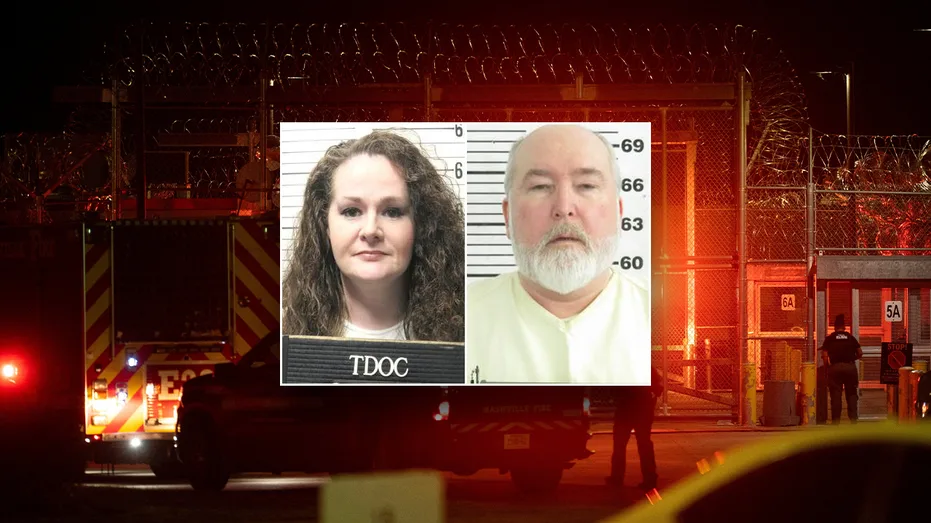
The scheduled execution of a man convicted of two murders, including one victim he reportedly helped bail out of jail only to kill, has been postponed following a significant incident involving Tennessee's lethal injection protocol. Governor Bill Lee has declared a statewide moratorium on capital punishment for the remainder of the year after a recent attempt to execute Christa Pike resulted in her survival, making it the second failed execution in the state this year. The only execution scheduled for this period was that of Gary Wayne Sutton, set for December 3.
Gary Wayne Sutton, who consistently maintains his innocence, was found guilty in separate trials for the murders of Tommy Griffin and his sister, Connie Branam. These killings occurred on February 21 and 22, 1992. Sutton's uncle and co-defendant, James Dellinger, died while on death row in 2023 due to natural causes.
Details of the Murders
The events leading to Tommy Griffin's death began after he, Sutton, and Dellinger reportedly engaged in an altercation following their departure from a location. Sutton and Dellinger allegedly left Griffin by the roadside. Court documents indicate Griffin then encountered a passing motorist who subsequently alerted a police officer.
The responding officer noted Griffin appeared distressed, "on the verge of tears," and was shirtless, displaying "scrapes and scratches" on his upper body and a cut behind his ear. Griffin reportedly told the officer he had been involved in "an argument with some friends, who were not really his friends." He declined to provide further specifics and was subsequently arrested for public intoxication.
Later that evening, around 8:30 p.m., Sutton and Dellinger arrived at the police station to post bail for Griffin, but were instructed to return later. They reappeared at approximately 11:30 p.m., bringing a flannel shirt. Witnesses reported hearing three gunshots in the vicinity where Griffin's body was later discovered, about half an hour after his release. He had sustained a fatal shotgun blast to the head.
The following day, Connie Branam, Griffin's sister, was seen with Sutton and Dellinger at Howie's Hideaway, where she informed a server she was searching for her brother. Her remains were later found inside her vehicle, which had been severely burned. The fire was so intense that forensic pathologists could not determine if she was alive when the blaze began. Investigators did recover a .303 cartridge, which was later matched to a rifle discovered at Dellinger's residence.
Despite the convictions, supporters of Sutton contend that the prosecution's case relies heavily on circumstantial evidence. Questions persist regarding the identity of Griffin's shooter and the precise circumstances of Branam's death.
Statewide Pause on Executions
Sutton's execution, initially slated for December 3, was placed on hold as a direct consequence of the state's unsuccessful attempt to carry out Christa Pike's death sentence the previous week.
This incident marks the second time Tennessee has encountered difficulties with lethal injection procedures this year. Earlier in May, the execution of inmate Tony Carruthers was canceled after personnel were unable to locate a suitable vein for drug administration.
Pike, who is currently receiving medical treatment at an undisclosed hospital in critical condition, has made history as the first individual known to have survived the administration of lethal injection drugs, according to the Death Penalty Information Center, a non-profit organization that monitors capital punishment across the United States.
The Death Penalty Information Center also notes a 2014 case in Oklahoma where inmate Clayton Lockett initially survived the injection process but ultimately succumbed to a heart attack while still within the execution chamber. While the future course of action for Pike remains uncertain, Governor Lee has stated that Carruthers will not face another execution attempt for at least a year following the cancellation of his scheduled death in May.