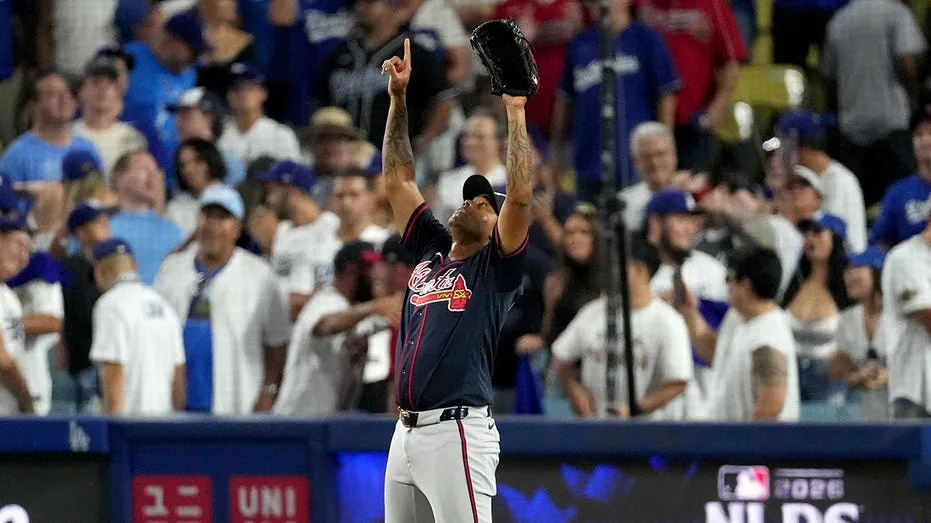
For several seasons, the Los Angeles Dodgers have been at the center of discussions regarding parity in Major League Baseball. Phrases such as "they're ruining baseball," "they've built a superteam," and "they're unbeatable" have frequently surfaced, often accompanied by sentiments that many fans and teams have lost hope of reaching or winning the World Series. This narrative largely stems from the Dodgers' back-to-back World Series titles and their consistent acquisition of high-priced talent.
Off-field discourse during much of the 2026 season saw league owners advocating for a salary cap in upcoming labor negotiations, directly attributing this demand to the Dodgers' significant spending. Curiously, proponents of this view rarely highlighted other teams with substantial payrolls, such as the New York Mets, who missed the postseason for two consecutive years despite a top-tier roster. Similarly, the struggles of big-market teams like the Giants and Angels, despite their financial resources, seldom entered the conversation.
Beyond the labor debates, however, are the undeniable on-field results. While the Dodgers have indeed secured two consecutive World Series championships and still have an opportunity for a third in 2026, Sunday night's Game 2 of the National League Division Series against the Atlanta Braves served as a potent reminder that no outcome in baseball is ever a foregone conclusion. It underscored why the sport's inherent unpredictability makes it impossible to truly "ruin" and why even the most meticulously assembled roster offers no guarantees.
Unexpected Setback in the NLDS
The Dodgers began the series with a relatively routine 5-3 victory in Game 1, featuring a strong six-inning outing from Tarik Skubal and home runs from Kyle Tucker, Teoscar Hernandez, and Max Muncy. When the Braves announced their ace, Chris Sale, would be held back for Game 3, many anticipated a significant advantage for Los Angeles in the second contest.
The Dodgers confidently sent two-time NL Cy Young Award winner Blake Snell to the mound. Atlanta, in stark contrast, opted for Ray Kerr, a little-used reliever who had not pitched in the majors in 2025, posted a 5.64 ERA in 2024, and demonstrated limited strikeout ability with just 11 punchouts in 18.1 regular season innings.
Despite the apparent mismatch, the Dodgers squandered numerous offensive opportunities, committed several uncharacteristic errors, and ultimately fell to the Braves 3-2, evening the series at one game apiece. Kerr, remarkably, delivered 2.2 scoreless innings against the potent Los Angeles lineup, building on his previous postseason success of 3.1 scoreless innings against the Philadelphia Phillies in a decisive Wild Card Game 3.
The Unpredictability of Small Sample Sizes
Some external observers might point to Kerr's 1.47 ERA in his limited regular season appearances as justification for his postseason effectiveness. However, deeper statistical analysis suggests a significant element of good fortune. Kerr's batting average on balls in play (BABIP) allowed in the regular season was an exceptionally low .143, far below the league average of approximately .300. Furthermore, his left on base percentage (LOB%) stood at an astonishing 98%, compared to the league average of around 75% for runners not scoring once on base. These figures indicate an unusually high degree of luck, which is statistically expected to regress over a larger sample size, as evidenced by his .403 BABIP in 2024.
Yet, this phenomenon precisely highlights the challenge of predicting outcomes in postseason baseball. Over a brief sample, such as a single series or even a few games, a pitcher like Ray Kerr can defy expectations and deliver six shutout innings against two of the league's top offenses. Indeed, through October, Kerr's BABIP allowed is .200 and his LOB% is 100%. While these numbers are unsustainable over an entire season, they are entirely plausible, if not improbable, within the compressed timeframe of a playoff series.
The margin between players in baseball is so fine that on any given day, a pitcher like Ray Kerr can outduel a decorated ace like Blake Snell, who was largely ineffective in his outing. Similarly, an inexperienced relief pitcher such as Didier Fuentes can pitch 3.2 innings, allowing only one run while retiring nine consecutive Dodgers hitters.
Looming Challenges and Star Player Health
Suddenly, the seemingly unbeatable Dodgers dynasty appears to face serious jeopardy. While it is only one game, and Los Angeles remains a slight favorite to win the series, the situation has shifted significantly. Atlanta now has the advantage of starting Chris Sale on regular rest in Game 3, at home. This comes shortly after Sale delivered a complete-game shutout against the Dodgers at Truist Park, striking out 11 and allowing only five baserunners.
Although each postseason start is an independent event, the Braves likely hold an edge in Game 3, even with Yoshinobu Yamamoto slated to start for Los Angeles. What once seemed a foregone conclusion could quickly become a 2-1 series lead for Atlanta by Tuesday night. The high-stakes, best-of-five format means an offense having an off-night, a routine pop-up being misplayed (as Teoscar Hernandez did on Sunday), or a wild pitch after a defensive miscue can swiftly bring a season to an end.
Adding to the Dodgers' concerns is the clear health status of their star hitter, Shohei Ohtani. Despite recording two singles in the NLDS, Ohtani has not displayed the dominant form he often exhibited during the 2025 playoffs.
In his initial at-bat, Ohtani struck out on four pitches from Kerr, with only one pitch remotely near the strike zone. His second plate appearance saw him pop up with one out and runners on first and second, after seeing seven pitches, six of which were outside the zone. In his final at-bat, he again struck out, despite seeing only one pitch in the zone, with the strikeout pitch nearly bouncing off the plate. When Ohtani is compromised, the formidable Dodgers lineup appears considerably more vulnerable.
Baseball's Enduring Unpredictability
This is not to suggest that the Dodgers' season is over, especially with Yamamoto, Tyler Glasnow, and a second start from Skubal still available. However, it vividly illustrates the fragile nature of the "superteam" designation in October. The phenomenon extends beyond Los Angeles; the New York Yankees, who tied for second in runs scored in the American League this season, were held to just one hit in Game 1 of their series, with that lone runner being thrown out at third base. A series that was initially seen as even quickly saw the Rays become significant favorites to advance, all because a strong pitcher delivered his best performance.
The notion that the best team will always prevail, as often observed in sports like the NFL, overlooks baseball's rich history. The postseason frequently sees unexpected heroes emerge, carrying their teams to glory. Consider Eddie Rosario's .560 batting average in the 2021 NLCS, Steve Pearce earning the 2018 World Series MVP after hitting three home runs and driving in eight runs in five games, or Mitch Moreland's crucial late-inning homer in Game 4 of a World Series to shift a series from 2-2 to 3-1.
Baseball's inherent unpredictability is precisely what makes it such a compelling sport. It is a quality that, hopefully, all involved will remember in the months to come, rather than seeking to fundamentally alter its essence.