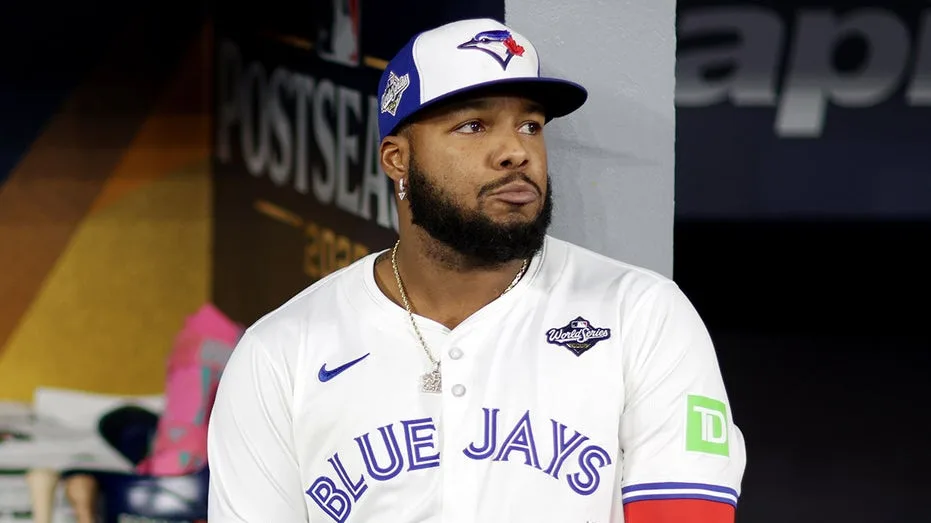
As the 2026 Major League Baseball season nears its conclusion, Toronto Blue Jays first baseman Vladimir Guerrero Jr. is looking to move past a challenging year. The six-time All-Star, who secured a 14-year, $500 million extension in April 2025—ranking as the third largest in MLB history—has recorded nine home runs, a .359 slugging percentage, and a career-low .695 OPS to date. The Blue Jays, who were American League pennant winners in the previous season with Guerrero playing a pivotal role in their World Series run, have been eliminated from this year's postseason contention, holding a 77-81 record as of Wednesday. This significant dip in performance from a player with such a monumental contract has drawn considerable criticism from the Blue Jays' fan base, a sentiment further fueled by his recent remarks.
A Challenging Season and Controversial Remarks
The 27-year-old infielder recently addressed his difficulties at the plate and the implications for his substantial contract during an interview with Telemicro News. His statements have garnered significant attention. Translated by MLB reporter Héctor Gómez, Guerrero stated:
"The contract I got was based on what I did, not necessarily for what I’m going to do. I understand why the fans believe it’s the other way around. Sometimes, I think that way, too, like, ‘Oh, they give me this money, and I’m not doing enough,’ but you know I try my best, and I’m working hard."
He further reflected on fan support, adding:
"The fans, I know how they are, when you are doing great they are 100% behind you. But when you are not at your best, not everybody is behind you, almost nobody supports you. Those are my real fans, the ones that are supporting me all the time."
Following the widespread reaction from the Blue Jays' fan base, Guerrero provided further context regarding his initial comments. Speaking to MLB.com, he explained:
"That was a quote from the interview when she asked me how I felt about this year. I said that, obviously, I feel really bad about the year that I had, that I couldn’t help my team get to the postseason. I said I felt – that it’s my personal opinion – that every player gets paid for what they have done. With that said, you guys have got to remember that I signed my contract at the beginning of last year, then I did put up a good year. Then, the kind of playoffs that I had to help the team get into the World Series."
He also reassured fans about his dedication, stating:
"To the fans, I’ve never stopped working very hard. I am going to go into the offseason again to prepare myself the best I can. Physically, mentally, everything that I have like I always do for my team and my teammates."
The Business of Mega Contracts
From a certain perspective, the Blue Jays' decision to offer Guerrero a 14-year, $500 million extension—a deal surpassed only by Shohei Ohtani's 10-year, $700 million agreement with the Los Angeles Dodgers and Juan Soto's 15-year, $765 million contract with the New York Mets—did indeed account for his past achievements. The organization recognized his stellar contributions from his 2019 debut through an exceptional 2025 season, which included eight home runs and a .397 batting average over 18 postseason games. However, such comments suggest a potential disconnect from the contemporary understanding of massive sports contracts.
In modern professional sports, particularly in Major League Baseball, agreements of this scale are not merely retrospective rewards. They are forward-looking investments, with the expectation that a player's previous high-level performance will continue and justify the substantial financial commitment over the contract's duration. Franchises structure these deals based on market value, which is inherently tied to anticipated future contributions, albeit with a strong consideration of past performance as an indicator. Ultimately, any significant investment carries an expectation of return.
Expectations and Future Outlook
Given a season where a power hitter's home run count remains in single digits—though he still has a few games to reach ten—and a career-low WAR (excluding the COVID-shortened 2020 season), both the Blue Jays organization and its supporters are justified in their disappointment. While Guerrero was undeniably instrumental in Toronto's 2025 World Series appearance, the team and its fan base are equally entitled to express dissatisfaction with what is not just a modest decline, but a career-worst showing across several key performance indicators.
It is improbable that the Mets would have offered Juan Soto the largest contract in league history without anticipating his continued superstar-level output. Similarly, the Dodgers would not have committed $700 million to Shohei Ohtani, even with significant deferrals, merely to compensate him for past achievements without expecting his contributions to their World Series aspirations. The expectation for any franchise, when investing nine-figure sums in players like Mike Trout, Mookie Betts, or Aaron Judge, is a substantial return on that investment. This is the prevailing reality in professional baseball, irrespective of how Guerrero perceives the basis of his contract. While this represents only one season, Guerrero's perspective on his deal, alongside his on-field production, will likely need to evolve over the remaining 13 years of his agreement.