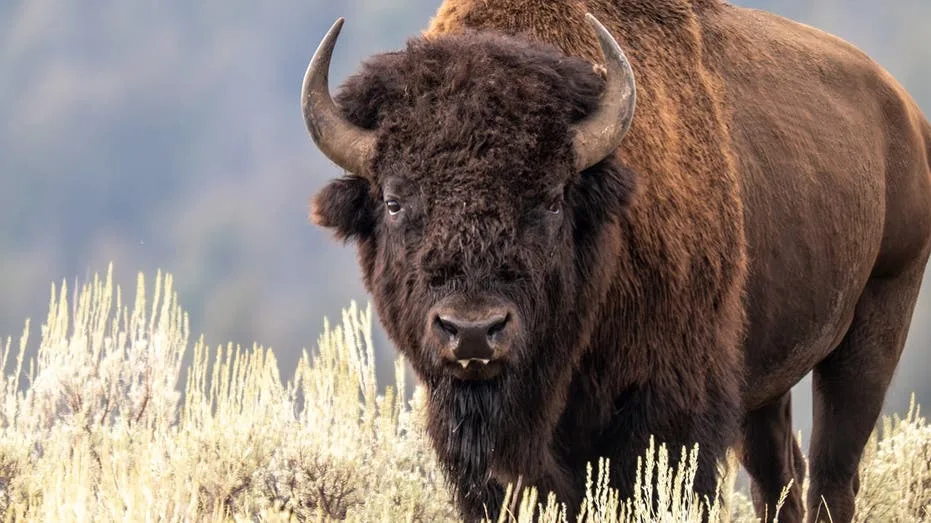
Just over a century ago, the wild bison population within Yellowstone National Park faced imminent collapse, teetering on the brink of extinction. Today, however, thousands of these magnificent animals freely traverse the park's expansive landscapes. This remarkable resurgence has transformed the conservation challenge from merely preserving a remnant herd to effectively managing a flourishing population.
Jessica Bowron, the acting director for the National Park Service, recently described this recovery as an "incredible conservation story." Historically, millions of bison once populated the vast Great Plains, but their numbers were drastically reduced across their traditional territories. According to Bowron, the effort to restore these populations has required decades of meticulous scientific endeavor and collaborative partnerships involving the National Park Service, various Tribal nations, and state, local, and federal agencies.
Bowron reflected on the transformation, stating,
"To show up at Yellowstone today and have the experience as a visitor of seeing a wild bison in a functioning ecosystem, I don't know that we could have predicted that 100 years ago."This represents a truly extraordinary reversal of fortune for the species.
Furthermore, bison from Yellowstone are now instrumental in establishing and bolstering conservation herds in regions extending well beyond the park's boundaries.
Expanding Conservation Through Tribal Partnerships
The park facilitates the Bison Conservation Transfer Program, a collaborative initiative with Tribal partners to rehome live bison that have successfully completed a stringent quarantine protocol. Since its inception in 2019, over 600 bison have been relocated to 29 distinct tribes spanning 13 states, as confirmed by Bowron. Notably, more than 200 of these transfers occurred in 2026 alone.
Bowron emphasized the significance of this aspect, remarking,
"This is one of the coolest parts of this entire conservation effort."She elaborated that once these animals are transferred, each recipient tribe gains the autonomy to manage its new herd in alignment with its distinct priorities and sovereign governance.
"It's a great example of how we're able to establish and expand conservation herds through that kind of partnership,"Bowron added, underscoring the effectiveness of such collaborations.
The Evolving Nature of Wildlife Management
Despite these conservation achievements, the work is far from concluded. While certain areas still aim to rebuild their bison populations, Bowron noted that Yellowstone's primary focus has shifted to the effective management of its already robust and healthy herd.
"I think at Yellowstone, we're in the latter — figuring out how to successfully manage the herd that we have with all of our partners,"she explained, detailing the contemporary approach.
Concurrently, the National Park Service actively seeks out additional live-transfer opportunities with Tribal communities keen on either establishing new conservation herds or augmenting existing ones.
The narrative of Yellowstone's bison also serves as a poignant reminder that conservation victories are the result of sustained, long-term effort. Bowron reiterated that the revitalization of bison populations demanded decades of scientific observation and collaborative engagement among Tribal, state, local, and federal stakeholders. Even once a species has recovered, the nature of the conservation work evolves rather than ceasing entirely.
From Near Loss to Abundance
For many generations, the fundamental question concerning bison in areas such as Yellowstone revolved around their sheer survival. Today, however, wildlife managers face a distinctly different challenge: how to effectively manage a species that has successfully made a significant comeback.
Bison naturally traverse vast landscapes, oblivious to the artificial boundary lines of Yellowstone National Park. This migratory behavior necessitates extensive cooperation between the National Park Service and the numerous surrounding communities and governmental agencies to ensure successful herd management.
The very existence of a healthy, manageable herd—one large enough to contribute to establishing new conservation herds elsewhere—would have been nearly inconceivable a century ago. For visitors who have experienced the common occurrence of a bison leisurely occupying the middle of a Yellowstone road, it may be easy to overlook how perilously close the nation came to losing such encounters forever. While witnessing these animals roam the park now feels like an inherent part of the experience, it was not always so. Indeed, this journey undeniably represents a remarkable comeback.