South Korea's Proposed Platform Law Could Cost U.S. States $525 Billion, Model Estimates
Controversial South Korean platform legislation is projected to cost U.S. states $525 billion over a decade, raising concerns among American lawmakers.
Politics·
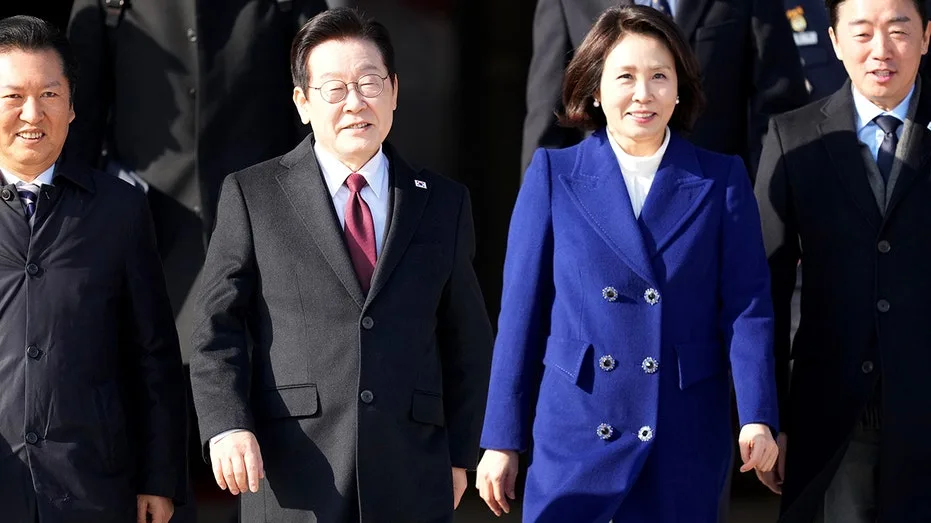
A new economic analysis suggests substantial financial repercussions for American enterprises should South Korea proceed with contentious legislation aimed at regulating interactions with certain U.S. companies. This development comes as legislators voice apprehension that South Korea's leadership is now "closely aligned with China."
The proposed Online Platform Fairness Act, spearheaded by the Korea Fair Trade Commission (KFTC), is gaining momentum within the Asian nation and has the endorsement of South Korean President Lee Jae-myung. A model developed by the Competere Foundation forecasts a staggering $525 billion reduction in economic activity across various U.S. states over the coming decade. This includes projected losses of $123 billion for California, $48.7 billion for Texas, $33.9 billion for New York, and $27.4 billion for Washington state.
Shifting Political Landscape
In South Korea's recent political history, Yoon Suk-yeol, a conservative affiliated with the People Power Party, was elected president in 2022. However, he was impeached in December 2024, with his decision to impose martial law cited as a primary factor in his removal from office.
Lee Jae-myung, who narrowly lost to Yoon in the 2022 presidential election, secured the presidency in 2025. The Democratic Party in South Korea already holds a significant majority in the National Assembly, and the country is now operating under a full Democratic majority.
The Democratic Party functions as the primary liberal political force in South Korea, advocating for progressive domestic policies. This contrasts with previous conservative ideologies that tended to reduce political engagement with North Korea and foster stronger relations with the United States.
Regulatory Concerns and Economic Warnings
The pending legislation, currently awaiting consideration in South Korea's assembly, seeks to expand the authority of the KFTC. This is the same government agency that members of the U.S. Congress have criticized for what they perceive as unfair treatment of American businesses.
"Korea is already an increasingly unfriendly place for U.S. companies to do business," stated Shanker Singham, an international trade and competition economist and CEO of the Competere Foundation. He added that the "looming regulations will make that environment even worse."
An unnamed "Stewart" commented on the broader implications, asserting, "South Korea's campaign against American companies isn't just a trade issue – it's a strategic mistake that benefits China." Stewart further explained that "Every time Korean regulators make it harder for U.S. innovators like Coupang, Google, or Meta to compete, they create more room for Chinese companies to gain market share and influence in one of the world's most important digital economies."
Stewart also highlighted that the financial impact would extend beyond Silicon Valley, suggesting that economic losses for American firms could translate into gains for China, as Beijing would likely capitalize on any reduced U.S. investment in the South Korean market.
Allegations of Discriminatory Practices
In early June, foreign policy experts Nicholas Eberstadt and Lawrence Peck published an editorial in The Wall Street Journal titled, "South Korea Takes a Hard Left Turn Against America." The piece included allegations that South Korean officials "stormed" U.S. air force bases as part of a domestic investigation.
This investigation reportedly centered on Coupang, a U.S. technology company often compared to Amazon. In early June, South Korea imposed a fine of approximately $410 million on Coupang for a data breach. This represented the largest fine ever issued by the country for a similar infraction.
South Korea's science ministry reported that a former Coupang employee, identified as a Chinese national, was responsible for stealing data and customer information from the American company, including sensitive details pertaining to South Korean citizens.
Minseong Seo, a spokesperson for the South Korean embassy, told Semafor that "The investigation into the case of Coupang is proportionate to the nature of the data breach and consistent with those applied to Korean companies in comparable cases."
In April, a bipartisan group of 50 members of the U.S. House of Representatives sent a letter to Republic of Korea (ROK) Ambassador to the United States Kyung-wha Kang. The letter conveyed their significant concern over what they described as "discriminatory" business practices targeting American firms.
The congressional letter specifically referenced an earlier report from Competere that had also detailed potential economic losses for the U.S. stemming from more stringent regulations imposed by South Korea.
"Many American tech companies have faced a range of regulatory actions that seek to punish them while shielding Korean domestic competition," the letter stated. It further cited recent research by Competere, indicating that "such regulatory actions by the ROK government will cost $1 trillion in combined economic damage to the U.S. and Korean economies over the next 10 years, with the U.S. economy losing $525 billion and American households losing nearly $4,000 each."
Related Stories
Lawmaker Introduces Bill to Curb Congressional Self-Enrichment Through Earmarks
A new resolution aims to close loopholes allowing lawmakers to profit indirectly from earmarks, citing public frustration over rapidly growing congressional wealth. This measure expands current rules, requiring
Sep 21
Unfavorable Views of Democratic Socialists Aid Republican Campaigns Heading Into November Elections
A new poll reveals 55% of registered voters view the Democratic Socialists of America unfavorably, while only 30% hold a positive opinion. Republicans are seizing on these numbers to portray all Democrats as far-left
Sep 21
Former President Trump's Apparent Hair Color Change Ignites Online Discussion
Former President Donald Trump's hair appeared noticeably darker on Friday, sparking extensive online discussion. Photos showed him arriving in New Jersey with a brunette-like hue, leading to numerous social media
Sep 6
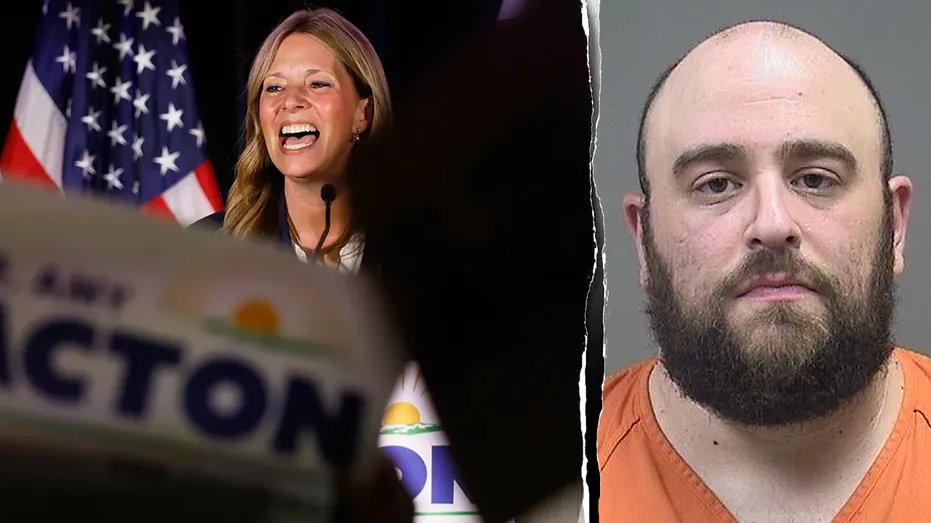
Armed Man Detained After Forcibly Approaching Ohio Gubernatorial Candidate Amy Acton at Fair
A man carrying a taser and two pistols was arrested at the Canfield Fair after allegedly assaulting multiple attendees while attempting to confront Ohio gubernatorial candidate Amy Acton. Acton was unharmed in the
Sep 6