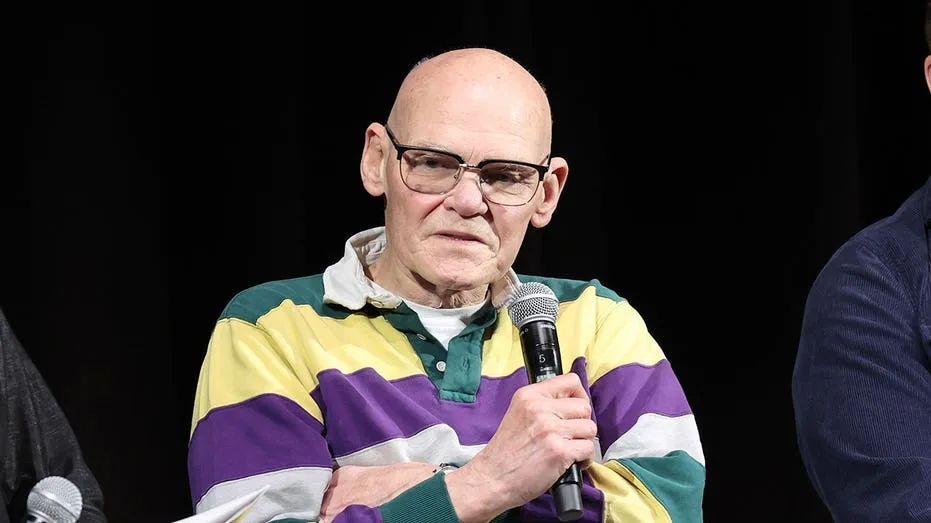
Veteran Democratic strategist James Carville recently delivered a pointed critique of campaign staffers who reportedly shared grievances with The New York Times regarding their experiences working for former Alaska Rep. Mary Peltola, who is currently running for the Senate.
A New York Times article, titled "Angry Outbursts, Slurs and Firings: Tumult Rocks a Key Senate Campaign," featured accounts from former aides. These individuals described a chaotic environment within Peltola's congressional office and her Senate campaign, as the Democrat seeks to secure a Republican-held seat.
Carville's Candid Assessment of Campaign Life
In a concise video shared on the Politicon channel, Carville addressed the report directly. "I want to react to a story I read in The New York Times concerning the Democratic nominee for the United States Senate from the state of Alaska," Carville stated. He continued, suggesting, "It would appear that we have some upset little staffers that she is not — when she's under pressure — not nice to ‘em."
Carville argued that the publication, and by extension the complaining staffers, seemed to misunderstand the demanding nature of political campaigns. "Of course, The New York Times didn't understand when you're in the middle of a political campaign, and you're a candidate, and you're under pressure, and you got everything coming in from everywhere, and you're trying to raise money, and you're trying to fend off attacks, and you're trying to do this, maybe you don't have time to be overly courteous to little pussified staffers that just — they — 'I want my name and my humanity,’" he remarked.
He then elaborated on his own campaign philosophy from past experiences. "I got news for you. When I ran campaigns, you didn't have a f---in’ name until you did something," Carville asserted. He described a direct approach: "'Hey, you, come over here! Do this! Do what the f--- you’re told and shut up!’ And you know what? Then, when you achieve something, or you do something, then you get a name. But until that, in politics, you don't have a name. Go do something else. Go be a social worker. They'll give you a name right away."
While acknowledging that "if somebody does something obviously dehumanizing or overly rude, then that's one thing," Carville drew a distinction. He contrasted genuinely abusive behavior with expectations like "Telling people to go get coffee for you or calling them by, ‘Hey, you.’ Everybody wants a pronoun. Well, I'll give you a pronoun. ‘You’ or ‘a--hole come over here.’" He implied that such demands for deference from junior staff contribute to electoral setbacks, stating, "Well s---, that’s why we lose."
Carville also touched upon what he perceives as increased scrutiny faced by female candidates accused of harsh conduct. "Why don't we just call every female candidate for everything a goddamn b-----? You'd save time," he suggested.
He dismissed the notion that all political workers are equal and that every opinion warrants respect as "nonsense." He concluded his message to those he deemed overly sensitive: "But do me a favor. If you, if you're that f---in’ delicate, if you're that much of a some kind of a honeysuckle, whatever it is, go do something else with your life. You're too weak. You're too soft."
Anticipating criticism from certain media outlets, Carville clarified that his remarks were intended for Democratic campaign staff. "But all — every — to every staffer on every Democratic campaign, on every — anything: just put your head down, work your a-- off and save the country and f--- your feelings," he emphatically declared.
Carville further commented on the demanding nature of political work, stating, "He is absolutely right regarding the intensity of political campaigns. Working on a race is hard, and it is tense, and therefore a thick skin is definitely a plus." While acknowledging that "it is absolutely inappropriate and wrong for a candidate to act as Peltola has been alleged to have acted," he expressed doubt that "the allegations, however serious, will affect the outcome of the Alaska Senate election. This is an election that is a referendum on Donald Trump and his governance, first and foremost."
Reactions to Carville's Stance
Elizabeth Pipko, a former national spokesperson for the Republican National Committee, echoed Carville's sentiments regarding the challenging nature of campaign work, describing it as an intense ordeal, particularly as an election approaches.
"Criticisms of Peltola aside, I do agree with Carville when it comes to campaign life and intensity," Pipko stated. "He is 100% correct about how cut-throat campaigns can be, and I’m sure how cut-throat they were back when he was working on them and before our culture changed as dramatically as it has."
Pipko emphasized the unpredictability and grueling schedule inherent in campaigns. "Campaigns are full of surprises, usually bad ones, meaning you never know what you’re walking into," she explained. "The closer you get to Election Day, the less you eat or sleep. And the high-stakes atmosphere usually gets the best of folks that aren’t able to compartmentalize their feelings and their thoughts, or who simply don’t have the stamina to keep up with how ruthless a campaign cycle can be. Campaign life is not for the faint of heart. In fact, I’d argue campaign life is not for most people, and that’s OK."