Cannabis Edibles Pose Hidden Driving Risk Despite Low Blood THC Levels, Study Suggests
A recent study indicates that consuming cannabis edibles can significantly impair driving performance and reaction times, even when standard blood tests show THC concentrations well below legal limits.
Health·
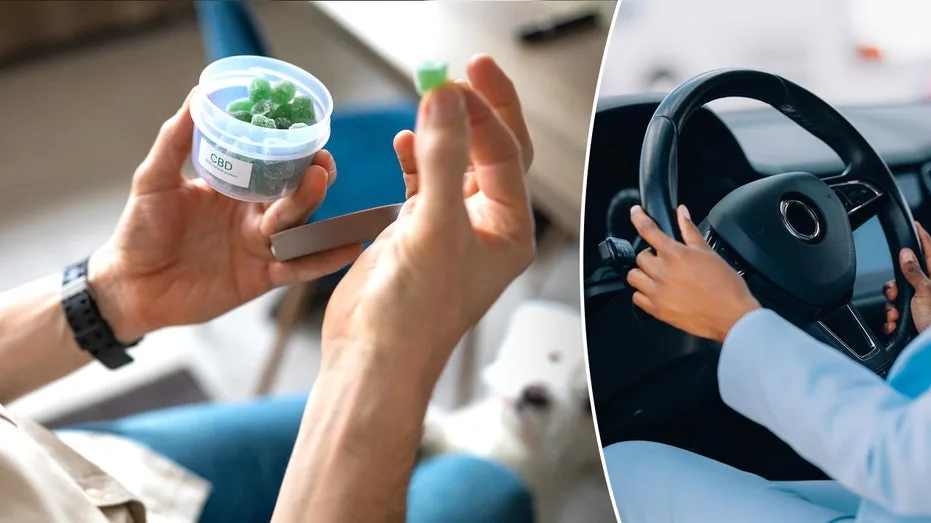
Driving after consuming cannabis edibles can significantly compromise road performance and reaction times, even when blood tests indicate tetrahydrocannabinol (THC) levels far beneath established legal thresholds, according to recent research. These findings, detailed in JAMA Network Open, bring to light a significant hurdle for impaired-driving enforcement in various Canadian and U.S. jurisdictions.
Unlike smoked or inhaled cannabis, which typically leads to a rapid surge in bloodstream THC — the primary psychoactive component of the plant — edibles are absorbed at a much slower pace. This delayed absorption means that impairment can manifest even as blood THC concentrations remain comparatively low.
Investigators observed that participants who ingested higher doses of edible THC exhibited difficulties maintaining lane control, demonstrated slower reaction capabilities, and experienced more pronounced fluctuations in speed. Crucially, despite these observable impairments, their blood test results consistently fell below the typical legal cutoff employed to establish impairment during roadside traffic stops.
Simulating the Effects of Edible Cannabis
To thoroughly evaluate the impact of orally ingested cannabis on driving abilities, researchers at the Centre for Addiction and Mental Health in Toronto organized a controlled trial. The study involved 40 healthy adult volunteers, all of whom reported regular cannabis use.
Each participant took part in four distinct sessions, consuming soft-chew gummies containing varying doses of THC: 0, 2, 10, or 20 milligrams. Following consumption, researchers assessed the drivers' performance using a sophisticated driving simulator at intervals of two, five, and 24 hours.
During these simulations, key metrics such as the drivers' ability to maintain their lane, their reaction speed to road incidents, and the consistency of their speed control were meticulously tracked. Alongside the simulator data, blood samples were collected, and participants provided self-reported ratings of their perceived intoxication.
Significant Impairment Despite Low Blood THC
The study's findings indicated noticeable driving impairment at both two and five hours subsequent to ingesting the 10- and 20-milligram THC gummies. Relative to the placebo group, participants who consumed these higher doses exhibited increased variability in their lane positioning. Specifically, the 20-milligram dose was additionally associated with delayed reaction times and less stable speed management.
Furthermore, participants demonstrated an awareness of their own diminished capabilities, reporting a decreased willingness to drive and reduced confidence in their driving skills after consuming the edibles.
The peak average blood THC concentrations recorded were 1.6 nanograms per milliliter following the 10-milligram dose and 3.4 nanograms per milliliter after the 20-milligram dose. These figures generally remained beneath the widely recognized 5-ng/mL impairment threshold, though it's important to note that THC limits can vary by jurisdiction, and some individual samples did surpass 5 ng/mL.
In a comparative analysis, participants in the research team's prior study involving smoked cannabis displayed comparable levels of impairment, yet their average peak blood THC concentration reached 30.3 nanograms per milliliter — a level nearly ten times greater than that observed in the 20-milligram edible cohort.
Challenges for Enforcement and Future Research
The study, however, acknowledges certain limitations. The evaluations were carried out using virtual simulators rather than actual roadways, which meant participants were not exposed to real-world physical risks during the experiments. Additionally, the research exclusively involved individuals who are regular cannabis users, leaving the potential reactions of occasional users to similar doses undetermined.
Minimal lingering effects were observed beyond the 24-hour mark. Although maximum speed was marginally elevated among participants who took the 10-milligram and 20-milligram doses, any subjective sensations of intoxication had entirely dissipated.
In a related commentary, Dr. José Ignacio Nazif-Munoz from the Université de Sherbrooke highlighted that these distinct biological characteristics present a considerable challenge for law enforcement agencies. Given that edibles are absorbed gradually through the digestive system, conventional blood tests might not effectively pinpoint impaired drivers, prompting policymakers to seek out more dependable roadside assessment instruments.
“The delayed absorption and prolonged duration of effects of edible cannabis distinguish it from smoked or inhaled cannabis, complicating the interpretation of biological measures,” he observed.
Related Stories

Examining Taser Effectiveness: Why Body Composition and Other Factors Can Impede Their Function
A Times Square stabbing incident where Tasers failed to subdue a suspect has sparked discussion on their effectiveness. Experts explain how factors like clothing, probe placement, and body composition, particularly
Sep 6

New Study Suggests High Daily Coffee Consumption May Affect Bone Density in Older Women
New research from Flinders University suggests that consuming five or more cups of coffee daily could be linked to lower bone mineral density in postmenopausal women. Conversely, tea consumption was associated with
Sep 5

Louisiana Girl Dies After Suspected Brain-Eating Amoeba Infection Linked to Lake Swim
An 8-year-old Louisiana girl passed away from a suspected Naegleria fowleri infection, a brain-eating amoeba, following a swim in Lake Claiborne. Her family confirmed the tragic loss, which occurred just one day after
Aug 24

Erectile Dysfunction Medication Tadalafil Associated with Increased Glaucoma Risk, Study Suggests
A recent study found that men using tadalafil for erectile dysfunction or enlarged prostate symptoms were significantly more likely to develop glaucoma. Researchers advise regular eye monitoring for long-term users,
Aug 23